Community Organization and Environmental Filtering
How environmental gradients and spatial structure shape benthic assemblages
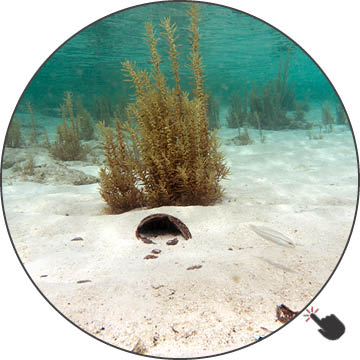
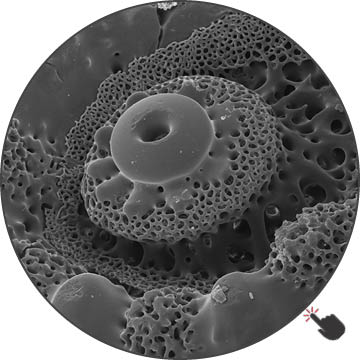
Soft-sediment seafloors are structured ecosystems. Community
composition, spatial patterning, and interaction intensity do not
emerge randomly; they reflect the coupled effects of environmental
filtering (sedimentology, hydrodynamics, water-column conditions)
and biological processes (movement, feeding, predation,
engineering). My research examines how these forces interact to
generate repeatable patterns in benthic marine communities and how
those patterns vary across sedimentary regimes and spatial scales.
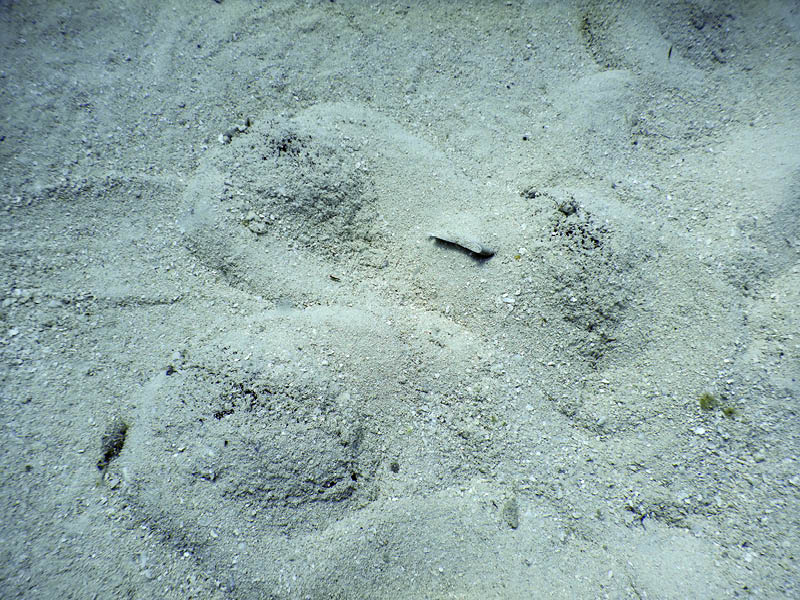
This theme sits at the core of my research program: developing a predictive, process-based understanding of benthic community organization across ecological and evolutionary timescales.
What is environmental Filtering?
Environmental gradients act as structured ecological filters: they constrain which taxa can occur, which functional strategies are viable, and how strongly interactions manifest. In soft-sediment systems, filtering is often mediated by:
- sediment grain size, carbonate vs siliciclastic substrates, and compaction
- organic content and biogeochemical context
- hydrodynamic regime and disturbance frequency
- water-column conditions that co-vary with habitat type
My goal is to quantify how these filters shape spatial structure and assemblage composition, rather than treating environment as background description.
Spatial structure and species distributions
A central component of my work uses quantitative field ecology and spatial analysis to explain how benthic organisms are distributed across heterogeneous landscapes. This includes mapping species occurrence patterns, measuring diversity structure, and evaluating how environmental gradients influence assemblage organization.
Grun and Kowalewski (2022, PeerJ) — Spatial distribution, diversity, and taphonomy of clypeasteroid and spatangoid echinoids of the central Florida Keys is an anchor study integrating distributional ecology with sedimentary context and taphonomic overprint, providing a process-based template for linking habitat variability to community pattern.
This work supports a broader research objective: to move from “where organisms occur” toward “why spatial structure emerges under specific environmental constraints.”
Community composition, functional diversity, and cross-system comparison
Environmental filtering is most powerful when examined comparatively. My research uses contrasts across habitat types and sedimentary regimes to test whether ecological patterns are system-specific or represent generalizable benthic dynamics. A key emerging direction is explicit comparison across environments, using echinoids and associated taxa as ecological indicators.
Environmental context, material properties, and organismal performance
Environmental filtering also operates through physiology and material constraint. The physical and chemical environment influences biomineralization, mechanical performance, and potentially ecological vulnerability. Integrating these dimensions helps connect habitat conditions to organismal performance and, ultimately, to community organization.
Gorzelak et al. (2025, PeerJ) — Geochemical signatures and nanomechanical properties of sand dollar tests from the Gulf coast of Florida: environmental and physiological controls supports the broader idea that environmental filtering is not only about which organisms are present, but also about how organisms perform and persist under particular conditions.
Environmental filtering meets time-averaging
Soft-sediment systems often preserve ecological patterns imperfectly. Time-averaging and preservation bias can blur spatial signals and distort apparent community composition. A distinguishing feature of my work is treating this explicitly: community organization is interpreted alongside its taphonomic and sedimentary context, allowing assessment of whether observed patterns reflect living structure or post-mortem mixing.
The 2022 Florida Keys paper integrates spatial ecology with taphonomic analysis, ongoing work on live–dead fidelity and bias mitigation advances this theme into a comparative, multi-taxon framework.
This is essential for process-based inference: understanding community organization requires knowing which parts of the pattern are ecological signal versus preservational artifact.
Ongoing and Emerging Directions
- Comparative datasets across carbonate and siliciclastic provinces
- Higher-resolution spatial modeling of habitat–community coupling
- Integration of organismal performance metrics (mechanical/physiological proxies) into ecological inference
- Scaling from echinoids as model organisms to multi-taxon assemblage frameworks
- Linking spatial structure to interaction intensity and ecosystem engineering