Biotic Interactions
Quantifying Predation, Parasitism, and Ecosystem Engineering in Benthic Systems
Biotic interactions are primary drivers of community organization in soft-sediment marine ecosystems. Predation, parasitism, and habitat modification influence species distributions, regulate population dynamics, and leave measurable signatures that can persist across ecological and evolutionary timescales.
My research examines these interactions as mechanistic processes
that structure benthic communities and generate durable ecological
signals. By integrating field-based marine ecology with quantitative
trace analysis and paleobiological comparison, I evaluate how
interaction dynamics scale from individual performance to
community-level organization—and how reliably those dynamics can be
reconstructed from the sedimentary record.
Predation as a Structuring Force
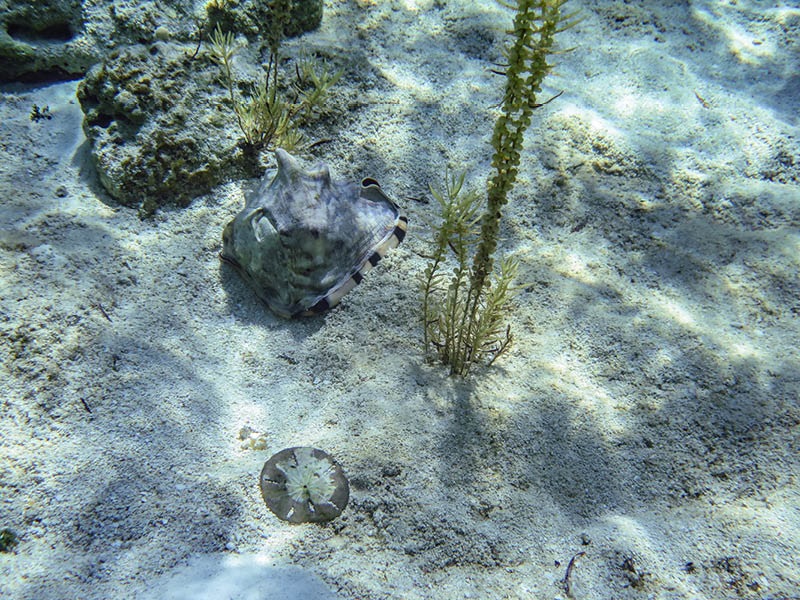
A central component of my work focuses on lethal and non-lethal predation in echinoids. Sediment-dwelling sea urchins record predatory encounters in the form of drill holes, crushing damage, marginal traces, and repair scars. These interaction signatures provide a rare opportunity to quantify ecological pressure directly.
My early work established methods for recognizing and interpreting predation traces in modern and fossil echinoids (e.g., drilling predation in Echinocyamus pusillus, Historical Biology 2014; Palaios 2017). Subsequent studies expanded this framework by comparing predation intensity across sedimentary contexts and preservation states (Journal of Paleontology 2017; Acta Palaeontologica Polonica 2016).
At broader scales, collaborative work demonstrated long-term intensification of predation on echinoids during the Cenozoic (Proceedings of the Royal Society B 2021), situating local ecological dynamics within macroevolutionary context. Ongoing work further evaluates predator–prey interactions from the Holocene to modern environments, directly testing the persistence of interaction regimes through time .
Together, these studies position predation not merely as a descriptive feature of communities, but as a quantifiable driver of ecological structure and evolutionary trend.
Non-lethal Interactions and Community Signal
In addition to lethal predation, my research addresses parasitism and non-lethal interaction traces as indicators of ecological pressure. Collaborative work characterizing predation and parasitism traces on fossil echinoids (Palaios 2020) demonstrates how sublethal damage patterns can inform reconstructions of interaction intensity and behavioral dynamics.
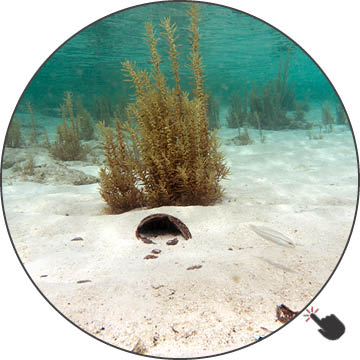
Field-based analyses in the Florida Keys further integrate spatial distribution, diversity structure, and taphonomic context to evaluate how interaction signatures vary across environmental gradients (PeerJ 2022). These studies connect interaction ecology directly to community assembly and sedimentary environment.
By treating traces as data rather than anecdote, this line of work strengthens the quantitative foundation of interaction ecology in benthic systems.
Interaction, Taphonomy, and Fidelity
Interaction signatures preserved in sediments are filtered by time-averaging and preservation bias. A consistent component of my research therefore evaluates how reliably predation and parasitism signals are transmitted from living communities into the fossil record.
Comparative taphonomic analyses of deep-sea and shallow marine echinoids (Palaios 2020), along with methodological work on sampling bias and fragment-inclusive approaches (in review, Paleobiology), address this problem directly.
This integration of interaction ecology and bias quantification allows me to distinguish ecological process from preservational artifact—a critical step in assessing whether observed interaction patterns represent transient conditions or persistent biological regimes.
From Interaction to Systems Ecology
Across modern field studies, experimental interpretation of structural damage, and macroevolutionary analyses, my work treats biotic interactions as measurable processes that scale:
- From individual injury and repair
- To population-level predation intensity
- To community composition and diversity structure
- To evolutionary patterns across geological time
Sediment-dwelling echinoids serve as model organisms within this framework, but the underlying objective is broader: to develop generalizable, process-based explanations for how interaction dynamics structure benthic communities.
Ongoing and Emerging Directions
Current research extends this program toward:
- Cross-system comparisons of interaction intensity in carbonate and siliciclastic regimes
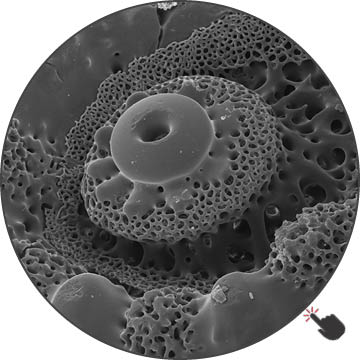
- Integration of geochemical and nanomechanical properties with ecological interpretation (PeerJ 2025)
- Refinement of live–dead fidelity metrics for interaction signatures
- Quantitative modeling of interaction dynamics under environmental change
By linking interaction ecology, structural biology, and taphonomic filtering, this work contributes to a predictive understanding of benthic community organization in both modern and deep-time contexts.